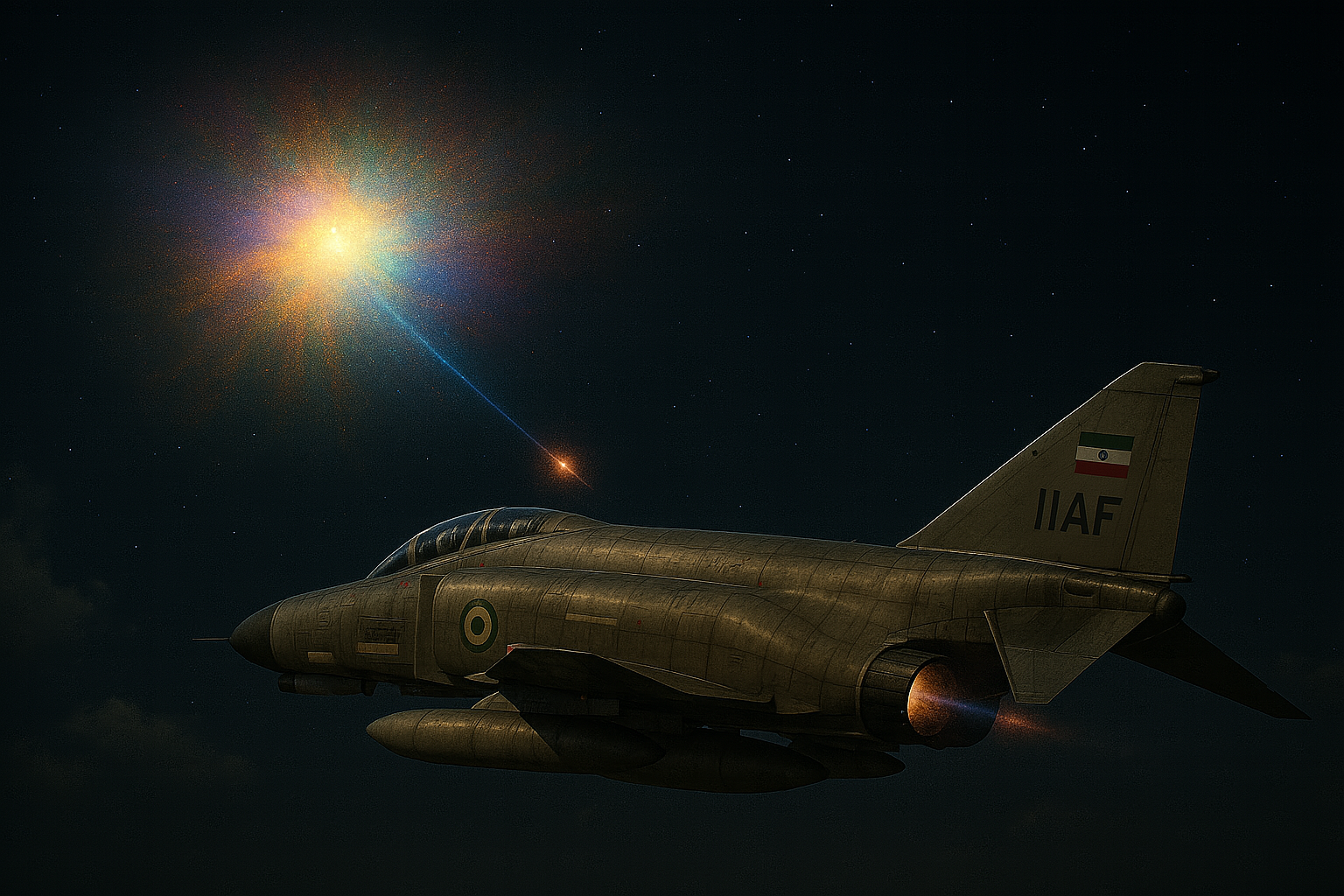
The Black Vault has published a detailed case file examining the September 19, 1976 Tehran incident, in which Iranian Air Force F-4 Phantom II jets were scrambled to intercept an unidentified object over the Iranian capital.
According to declassified U.S. Defense Intelligence Agency documents, two F-4s were dispatched after ground radar and civilian reports detected a bright object in the night sky. The lead aircraft reportedly experienced instrument malfunctions and communications failure upon approach. A second F-4, piloted by Lieutenant Parviz Jafari, allegedly achieved weapons lock on a smaller object that detached from the primary target—only to have his fire control systems go offline before he could engage.
The DIA evaluation, obtained through FOIA requests, rated the report's information value as "high" and noted the incident involved "ichly credible" witnesses. The case has been cited in congressional testimony and remains a reference point in UAP research due to its radar corroboration, multiple military witnesses, and documented electromagnetic effects.
Greenewald's case file compiles primary documentation including the original DIA signal intelligence report, contemporaneous Iranian military accounts, and subsequent U.S. government evaluations. The analysis also addresses skeptical counterarguments—including misidentification of celestial objects and equipment malfunction—while noting that no official explanation has been accepted as definitive.
The 1976 Tehran incident is frequently grouped with other military UAP encounters of the era as an example of cases involving trained observers, multiple sensor platforms, and documented chains of custody for official reports.